Warm floor tiles, high gas bills, and water heaters running around the clock indicate an under-slab hot water rupture. We isolate, locate, and restore hot water delivery safely.
Why Hot Water Plumbing Lines Fail First Under Foundation Slabs
Among residential foundation plumbing failures in Contra Costa County, hot water lines account for more than 75% of all calls. Homeowners in Brentwood frequently discover that their first plumbing failure occurs on the hot distribution manifold rather than the cold line. Addressing a hot water slab leak repair Brentwood situation promptly protects both your flooring and your water heating equipment from premature breakdown.
The primary reason hot water lines deteriorate faster is continuous thermal expansion and contraction. Copper pipe expands significantly when hot water flows through it and contracts when the water cools. Buried directly within concrete slabs or resting against rough crushed-stone subbase, the uninsulated copper rubs persistently against surrounding aggregate. Over thousands of heating cycles, this mechanical friction wears thin spots in the pipe walls, eventually resulting in a burst fitting or high-pressure spray.
Recognizing Signs of a Hot Water Line Leak Under Slab
Because hot water carries distinct thermal signatures, homeowners can often recognize symptoms earlier than cold-line failures. Classic indicators of a hot water line leak under slab Brentwood include:
Unexplained Warm Spot on Floor Brentwood: You step onto kitchen tile, bathroom vinyl, or bedroom carpet and notice an isolated warm or heated patch of floor that persists throughout the day.
Water Heater Running Constantly Brentwood: Your water heater burner fires continuously or the electric heating elements never shut off because heated water is escaping beneath the foundation at 30 to 60 gallons per hour.
Skyrocketing Energy Bills: A dramatic spike in your monthly PG&E gas or electric statement without any change in thermostat habits or family laundry routines.
Premature Depletion of Hot Water: Showers run lukewarm or run out of hot water in just a few minutes because the water heater is continually discharging heated water under the floor.
Hissing Sound Near the Water Heater: Hearing water steadily circulating through the hot discharge nipple even when no fixtures inside the home are turned on.
Water Heater Running Constantly or Floor Feeling Warm?
Do not let escaping hot water erode your foundation substrate or burn out your water heater. Speak with our local plumbing team now.
How We Locate Hot Water Leaks With Thermal Infrared Cameras
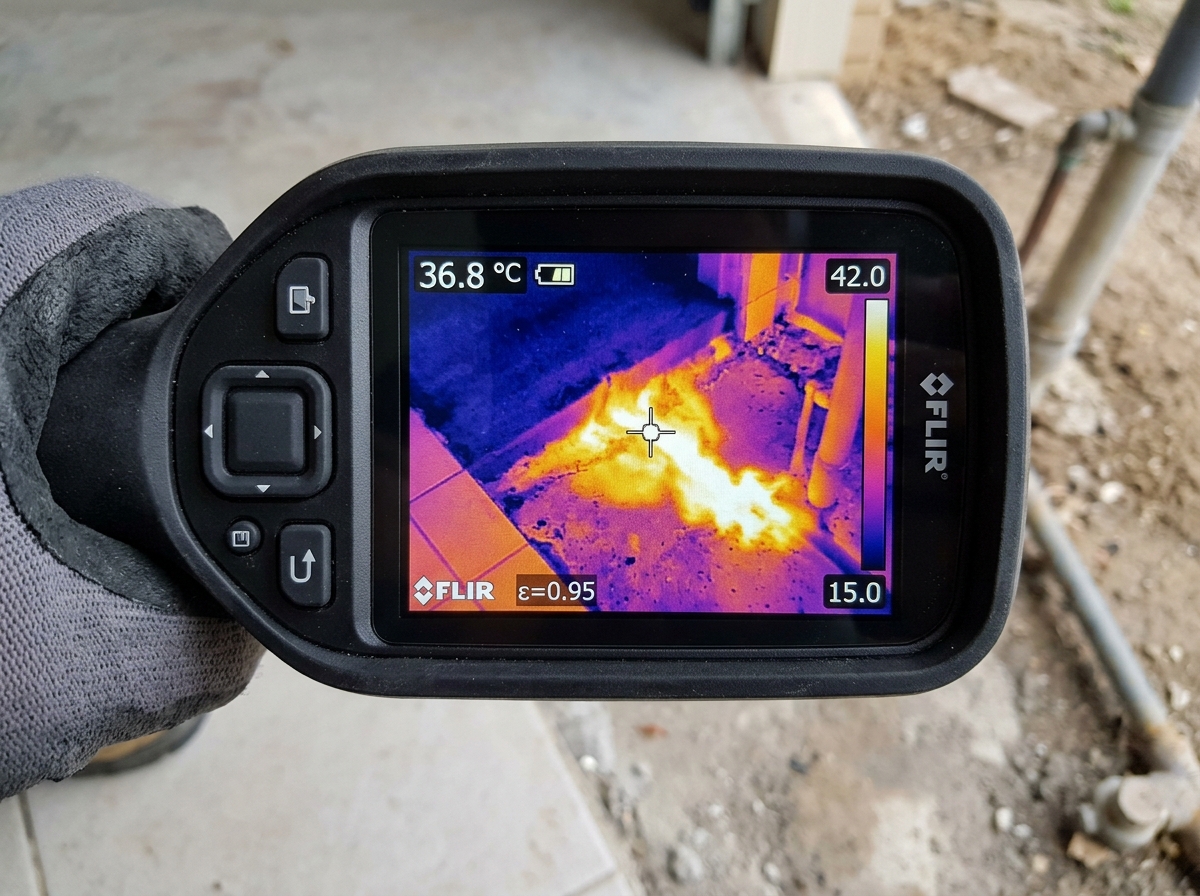
Locating a hot-water leak under concrete is expedited through high-definition forward-looking infrared (FLIR) thermal thermography. Unlike cold water, which can take days to reveal temperature variations on surface flooring, heated water radiates thermal energy upward through the concrete slab.
Our technicians scan floors with industrial-grade thermal imagers that detect temperature changes as subtle as 0.1 degree Fahrenheit. The monitor displays a radiant color gradient—glowing bright yellow and magenta—directly highlighting the plume where hot water disperses beneath tile or floorboards. By cross-referencing this visual heat map with acoustic sensors from our slab leak detection system, we establish pinpoint locational accuracy.
Repair vs. Overhead Reroute for Hot Water Lines
When dealing with a hot-water rupture, homeowners face an important choice between two primary restoration methods:
Direct Foundation Spot Excavation: If the leak is located in an unfinished laundry room or garage, cutting a small opening in the concrete and replacing the broken section with high-grade copper can be practical. However, because the rest of that hot line is the same age and subject to the same thermal fatigue, spot repairs carry a risk of future pinholes nearby.
Dedicated Overhead Hot-Side Reroute: In the vast majority of Brentwood homes, the optimal long-term strategy is an overhead bypass. Technicians cap the failing hot line at the water heater manifold and fixture riser, then install a brand-new, flexible PEX-a line through the attic and wall cavities. Learn more about how a slab leak reroute protects your high-end floors permanently.
Protecting Your Water Heater and Foundation Subgrade
When a hot water slab leak runs unchecked, the superheated water accelerates soil degradation beneath your foundation. In Brentwood's expansive clay soils, thermal saturation can cause localized heaving, forcing concrete upward and cracking baseboards. Furthermore, continuous cycling degrades the water heater's internal tank lining and burners. In cases where older homes suffer repeated hot and cold line breakdowns, comprehensive whole-house repiping provides a complete reset.
If you need expert assistance navigating property damage claims, our slab leak insurance help guide outlines key steps for working with insurance carriers. We provide complete diagnostics throughout our regional service areas, including Brentwood, Oakley, and Discovery Bay.
Frequently Asked Questions: Hot Water Slab Leaks
Immediately turn the cold water supply valve on top of your water heater to the OFF position, or turn your main water shutoff off. Also switch the water heater gas valve to Pilot or turn off the electric breaker. This halts the pressurized hot water flow and prevents element burnout while you arrange service.
You pay twice for a hot-water leak: first for the hundreds of gallons of escaping municipal water, and second for the gas or electricity required to continuously heat that water as it drains beneath your home around the clock.
Yes. While carpet padding provides some insulation, escaping hot water heats the concrete slab so extensively that thermal signatures easily conduct upward through carpet fibers, showing clear heat plumes on our thermal monitors.